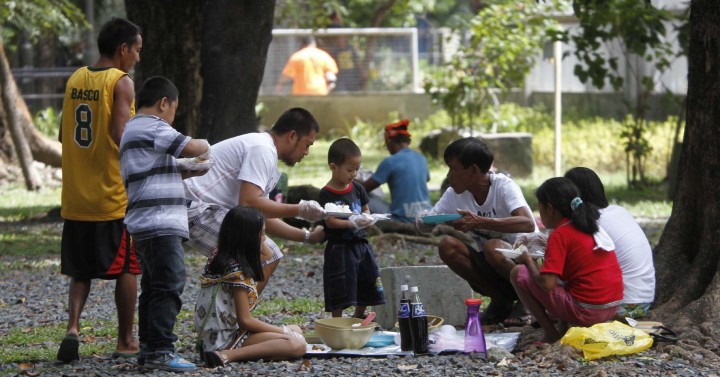
For many Filipino families, caring for loved ones is part of everyday life. But for adults raising children while also supporting aging parents, family responsibilities can sometimes mean being pulled in two directions at the same time.
This is the reality of the so-called “Sandwich Generation”—adults who find themselves caring for their own children while also providing support to aging parents. The issue recently gained attention after ABS-CBN Lifestyle examined the emotional and mental-health realities of people living between these two caregiving roles.
The term describes more than simply having children and elderly parents at the same time. For many caregivers, the role can involve managing household responsibilities, paying for medical needs, helping with daily activities, providing emotional support, and making decisions for different generations of the family.
In the Philippines, these responsibilities can be particularly significant because family members often remain closely involved in one another’s lives. A 2024 study by De La Salle University on working Filipino women found that sandwich-generation caregivers commonly provide financial and material support, physical and health care, home management, communication and psychosocial support, and other forms of care to their children and older parents.
The responsibility is not always limited to caregiving in the traditional sense. For working adults, it can also mean balancing employment with household duties and the financial needs of several family members.
Research focusing specifically on Filipino women in Metro Manila illustrates how demanding that balance can become. A 2025 study published by researchers from the University of the Philippines Los Baños examined eight sandwich-generation women living in Metro Manila and found that participants often carried both domestic and economic responsibilities. The researchers also noted that their caregiving was influenced by a perceived responsibility to help their families, as well as gender roles and expectations.
That combination can make caregiving difficult to separate from the rest of everyday life.
A parent may have to think about school expenses in the morning, work responsibilities during the day, and an aging parent’s medicine, doctor’s appointment, or household needs by evening. For some families, financial decisions also have to account for children’s education and daily expenses alongside the healthcare and living costs of older relatives.
The growing number of older Filipinos makes these responsibilities increasingly relevant. Data presented by the Philippine Statistics Authority in a 2026 national discussion on aging showed that people aged 60 and above made up 9.6 percent of the Philippine population in 2025, bringing the country close to the 10-percent threshold commonly used to describe an aging society.
As the population ages, more families may find themselves navigating questions about long-term care, healthcare expenses, living arrangements, and who will take primary responsibility when an older family member begins to need more assistance.
Yet being part of the Sandwich Generation does not necessarily mean that family life is defined only by stress.
The DLSU study found that while the women interviewed described sandwich caregiving as challenging, they also expressed gratitude and contentment. Support from family, friends, and work, along with personal faith and a sense of gratitude, emerged as important factors that helped them cope with their responsibilities.
The Metro Manila study likewise showed that intergenerational caregiving can involve both rewarding and difficult experiences. The women in the study viewed their caregiving responsibilities as deliberate choices connected to their sense of family responsibility, even as they carried the weight of domestic and economic expectations.
This is an important part of the conversation because caregiving is often treated as something families are simply expected to handle.
But behind that expectation are people who may also be working, raising children, managing a household, maintaining relationships, and trying to make time for themselves. When these responsibilities overlap, the caregiver can easily become the person everyone depends on while their own needs receive less attention.
Recognizing that reality does not diminish the value of caring for family. Instead, it makes room for a more realistic understanding of what caregiving requires.
For families, that can begin with sharing responsibilities rather than allowing one person to carry most of the physical, emotional, and financial burden. Conversations about household expenses, medical needs, schedules, and future care can also help families prepare before responsibilities become overwhelming.
For those already living in the middle of two generations, asking for help can be just as important as providing it. Support may come from siblings, partners, relatives, friends, workplaces, or community resources, depending on what is available to the family.
The Sandwich Generation is ultimately not only a story about pressure. It is also a reflection of how Filipino families continue to care across generations.
As more Filipinos grow older and families continue to navigate changing economic and household realities, the challenge will be finding ways to make caregiving more sustainable—so that those caring for their children and parents do not have to disappear in the process of taking care of everyone else.
For the generation caught in the middle, caring for family may be a responsibility rooted in love—but it is also a responsibility that should never have to be carried alone.